Instinctual Recognition
You walk into a room and see a picture frame hanging crooked on the wall. The misalignment registers before you have decided to look at it.
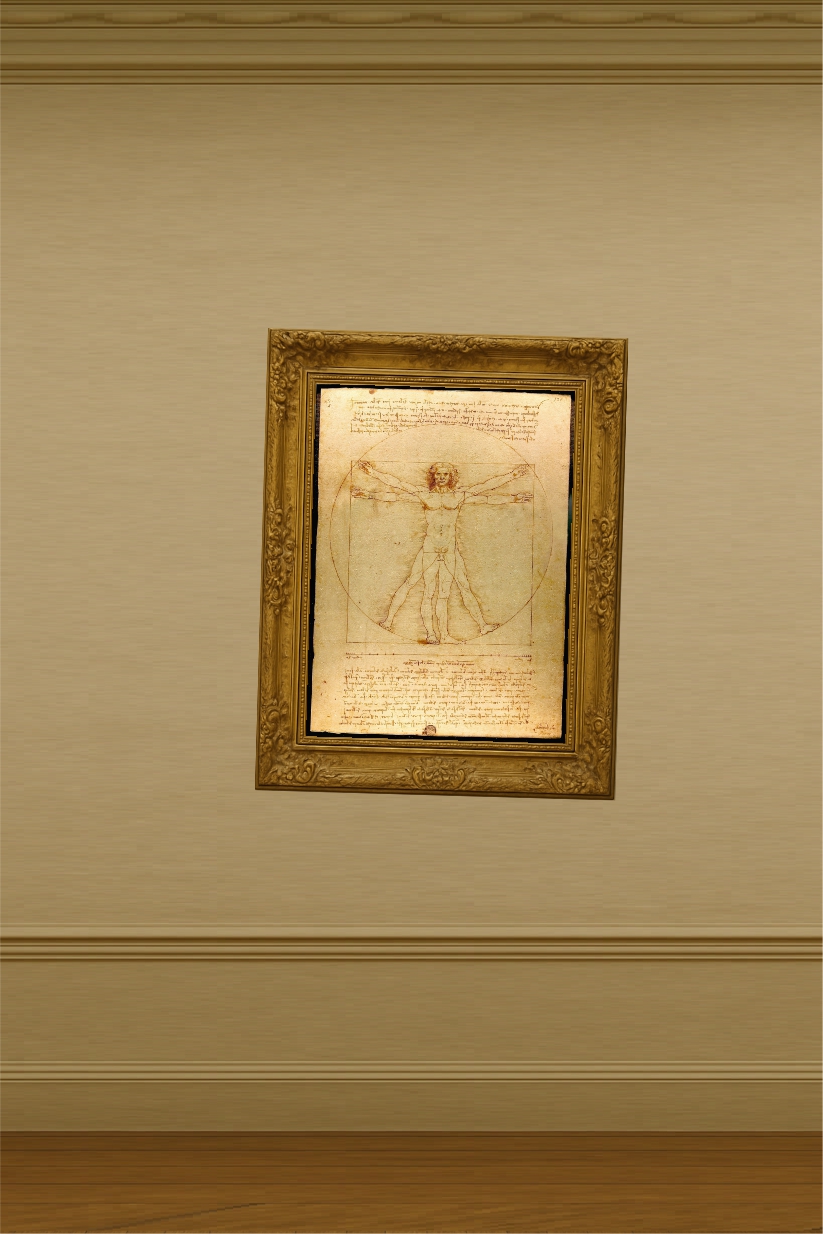
The response is involuntary and nearly universal. Something in you measured what was on the wall against something else and registered the deviation. That something is instinctual recognition. It operates below conscious analysis. It produces a signal. It does not announce what it is detecting.
Now look past the misalignment to the image itself. You recognize the human form as well-proportioned before any analysis begins. Leonardo's Vitruvian Man traces what the recognition was responding to. The arms and legs trace circles and squares. The body segments follow consistent ratios. Leonardo did not invent these relationships. He recognized them.
Both the misalignment and the proportion arrive before thought. Both reward the analysis that follows. Instinctual recognition is real, it operates, and it points at what it recognizes.
The Mechanism of Detection
The recognition that produces the crooked-frame response operates through specific biological architecture. Bilaterally positioned eyes and the vestibular system register geometric misalignment against a plane perpendicular to gravity. The detection appears in pre-verbal infants who have not yet learned what straight is. It appears in newly sighted adults receiving visual information for the first time. It appears across species whose visual systems evolved under the same gravitational constraints.
The detection is not a cultural construction. It is evolved biological machinery, shaped by the physical world over millions of years to recognize what that world contains.
What Recognition Is Calibrated To
Recognition is not reacting to the frame. It is reacting to the alignment the frame placement has broken. The horizontal edges of the frame violate the parallels established by the ceiling and floor; the proportional arrangement; and the intact geometric order. That is what recognition is calibrated to.
This changes what the recognition is doing. It is not detecting deviation for its own sake. It is pattern detection against a standard, producing a differentiated signal. When the standard is present, recognition produces satisfaction. When it is absent or violated, recognition produces alert. The straight tree, the intact grove, the framed picture hanging level: these are what recognition is calibrated to. The crooked frame is what it registers, but the alignment is what defines recognition.
The Hexagon: Convergence as Proof
Is what recognition detects objectively present, or does the standard exist only in the recognition itself? The answer is in what reality does when no one is watching.
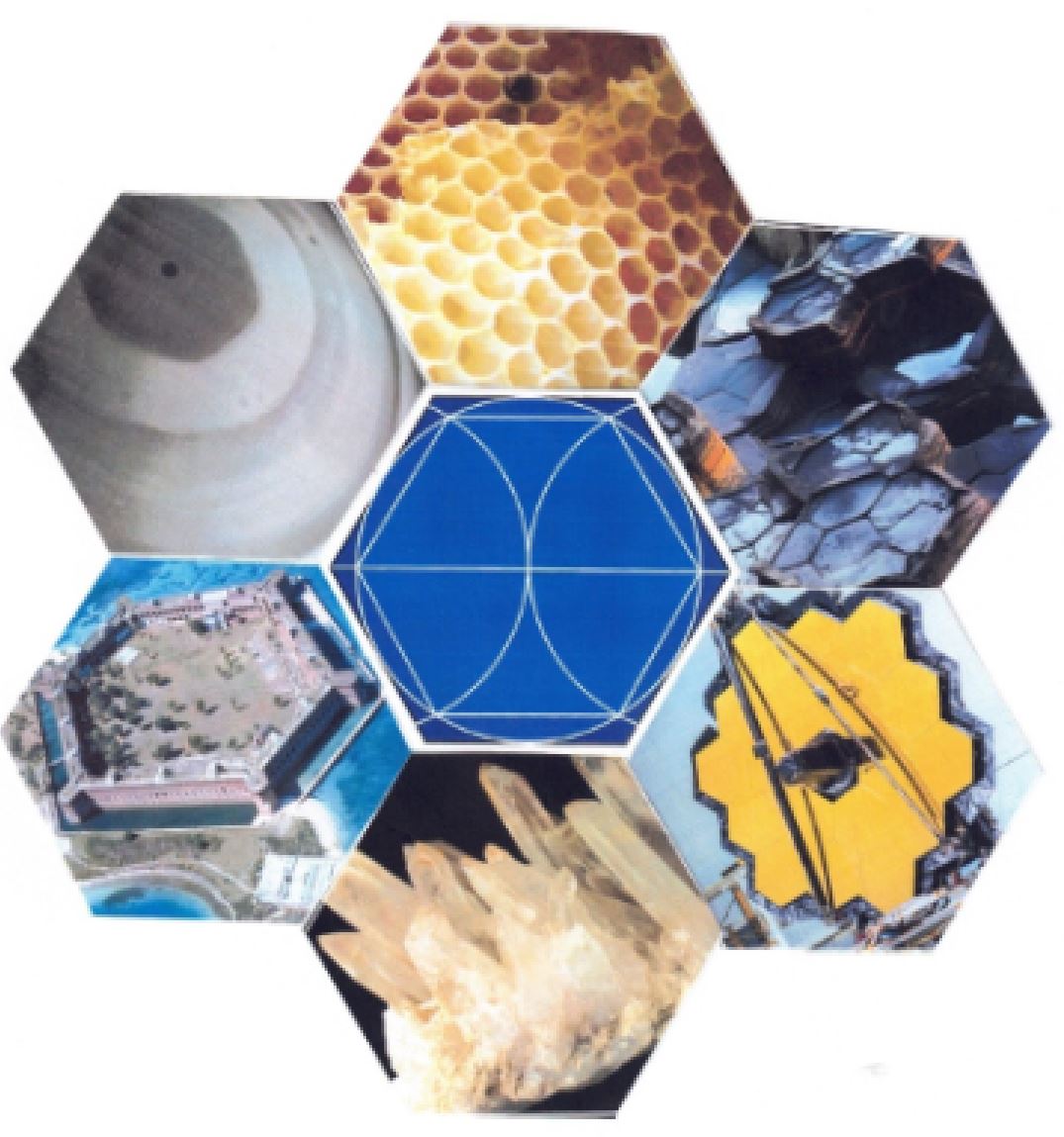
Bees build hexagonal cells in honeycomb. Basalt cools into hexagonal columns. Crystal structures organize molecules into hexagonal patterns. Saturn's north pole displays a hexagonal cloud formation. Retinal photoreceptors arrange in hexagonal arrays. Engineers independently design hexagonal geometries under optimization constraints.
These systems share no common origin. Different materials, different purposes, different constraints, different evolutionary and physical histories. They converge on the same shape because the shape solves a problem reality keeps posing. The hexagon tiles the plane with no gaps. It encloses maximum area with minimum perimeter. It distributes load through its structure with an efficiency no other simple polygon matches. These are not preferences. They are theorems.
The bees did not consult the crystals. The crystals did not persuade the engineers. Each system met the same problem and found the same answer because the answer is in the mathematics, not in the observer. When systems that cannot have copied from each other reach the same solution, the solution is not coming from any of them. It is in objective reality, and they are each finding it.
Synergistic Combinations
The hexagon is one solution reality keeps producing. There are many. Streamlined forms in fluid dynamics. Spiral arrangements in growing structures. Branching patterns in distribution networks. These solutions do not only appear in isolation. They combine. When they do, the combination produces something the individual solutions do not.
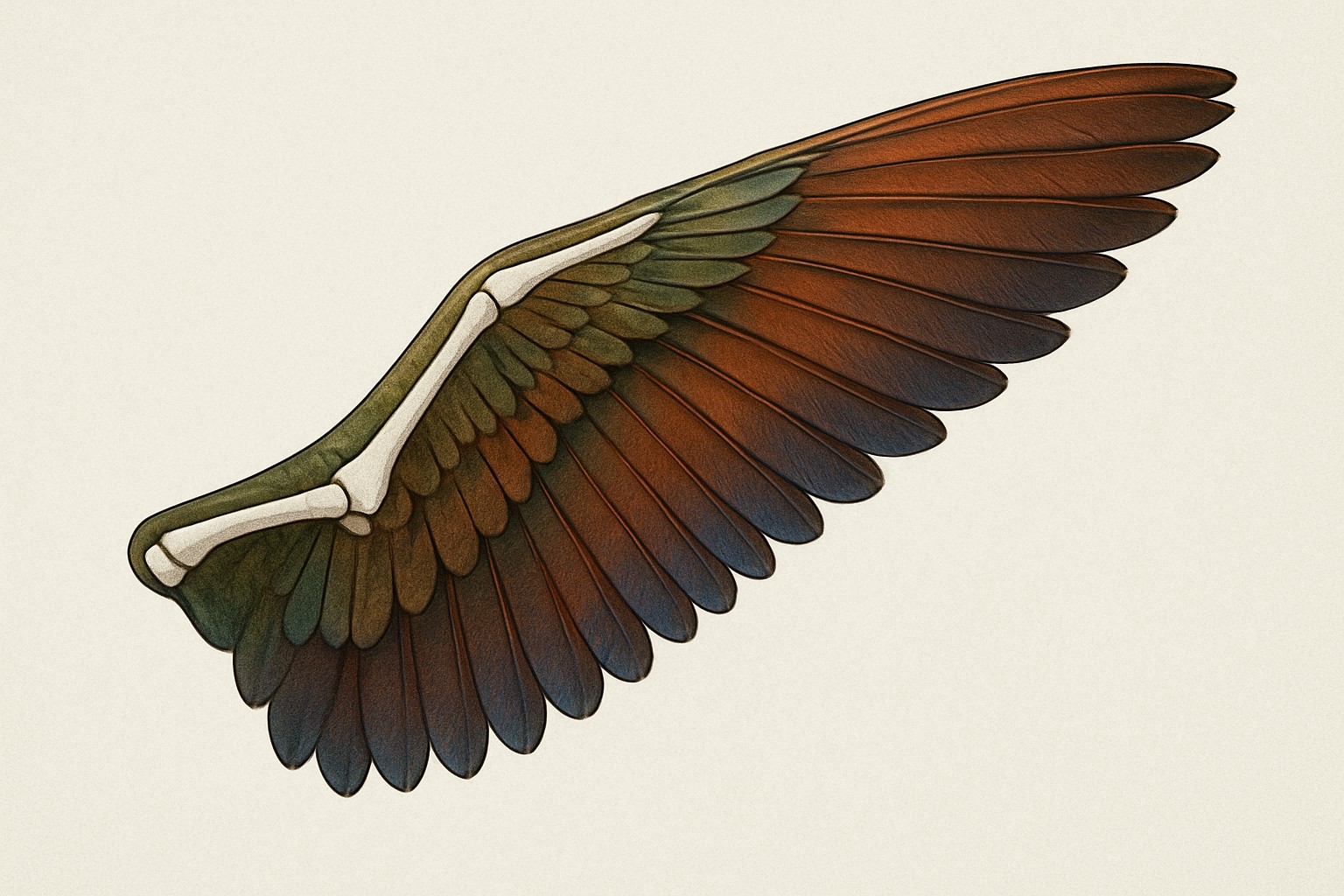
Consider a bird's wing. The airfoil shape generates lift while minimizing drag. The bone structure is hollow, optimizing strength against weight. The feathers overlap in arrangements that handle aerodynamic forces and add structural resilience. No single solution accounts for flight. Flight is what the synergistic combination of solutions produces.
The airfoil works because the bones are hollow. The feathers succeed because of how they meet the air. Resilience emerges from the whole system operating together. Analyzing each solution in isolation will not reach what the solutions together accomplish. The combination is the answer.
Each component is itself an optimization. The integration is another. The bird's wing is optimization at two levels: the parts and the whole. Both are objectively present. Both are what sufficiently sophisticated recognition finds when it looks at flight.
The Integration Pattern Across Life
The hexagon shows reality producing the same solution across systems that could not have copied from each other. Life shows reality doing the same thing across lineages that could not have copied from each other either. The convergence is what matters. Where the underlying problem is the same, the solution is the same.
The problem life keeps solving is this: how does a mobile, conscious creature, living in a complex social environment over a long developmental period, transmit what matters across generations? Wherever that problem appears, evolution arrives at the same solution. DNA stores algorithms that produce instinctual cognition, and those algorithms persist across generations because they are encoded in what gets passed on.
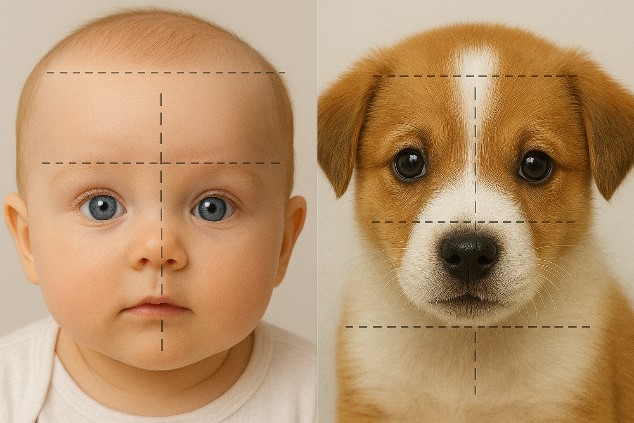
Functionally equivalent DNA-encoded algorithms also recognize signals across species lines. Large eyes relative to head size. Rounded forms. High foreheads. Short limbs relative to torso. Mammalian young carry these features, and mammals across unrelated lineages respond to them. Humans find puppies adorable. Dogs adopt orphaned kittens. Unrelated mammals protect young that are not their own. If aesthetic response were only subjective projection, different species would react differently. They do not. They converge. The signal is in what young mammals are, and the recognition is calibrated to it across the tree of life.
Wolves form bonded packs across generations and coordinate hunts through individual knowledge of each pack member's capabilities. Elephants recognize their dead and return to the bones. Orcas transmit dialect-specific hunting techniques through matrilineal lineages that persist across decades. Corvids solve multi-step tool problems and remember human faces across years. Primates construct social hierarchies of sufficient complexity that individuals track reciprocal obligations across extended time.
The bee colony illustrates this convergence at depth. Bee DNA stores architectural blueprints for hexagonal construction. It also stores the social organization of caste differentiation and role assignment, the communication protocols of pheromone language and the waggle dance, and the navigation systems of sun compass orientation and landmark recognition. These are inherited genetic programs, not learned behaviors. Bees raised in complete isolation still perform perfect hexagonal construction and waggle dances with no learning period required. What they do is encoded in what they are.
These are not isolated examples of complex instinctual behavior. They are the same solution expressed across unrelated lineages. DNA encoding the algorithms, instincts producing consistent behavior, social bonding structuring the transmission across generations. Evolution converges on this solution because the problem keeps presenting itself.
The hexagon is in itself an objectively valuable characteristic. The bird's wing comprises multiple objectively valuable characteristics, and their integration is itself an objectively valuable characteristic. What makes a characteristic objectively valuable is that it solves a problem reality poses, recurs across independent systems, and/or produces through integration what no component produces alone.
Humans As An Elegant Solution
Humans express a particularly elaborate integration of objectively valuable characteristics. The instinctual algorithms span survival, value recognition, aesthetic response, moral intuition, social bonding, cultural transmission, and environmental reading. The cognition is calibrated to extend what instinct detects rather than override it. The multigenerational bonding is elaborated into cultural inheritance that persists across millennia.
What differentiates humans is not the presence of the integration but its degree. The capacity to reach beyond immediate perception toward what could be. The capacity to articulate what instinct detects and to build civilizations around what the articulation produces. The capacity to transmit what instinct recognizes through language, art, law, and philosophy rather than only through observed behavior.
The upright posture that freed the hands. The hands that build what the mind imagines. The eyes that reach beyond the horizon. The cognition that holds future states and works toward them. The tongue that passes what one generation learned to the next. The integration that produced all of this in a single embodied creature is what made cognitive succession possible.
These capacities together are what the broader Self-Sustaining Isolate Societies work calls quintessential human qualities: the interplay of instinctual algorithms and moderate intelligence expressing itself as romantic sensibility and behavior, nurtured by a close-knit community of multigenerational families.
The instinctual algorithms are the inherited programs that operate before deliberation. They span survival, value recognition, aesthetic response, moral intuition, social bonding, cultural transmission, and environmental reading. Moderate intelligence is cognition substantial enough to reflect on what instinct detects without overwhelming it. Romantic sensibility is what their integration produces: the reach beyond what is toward what could be, the creation of meaning that outlasts the individual life, the love poem and the cathedral and the planted tree.
The multigenerational family is what these algorithms need to produce what they are built to produce. A person raised without family still has the instinct to bond. A culture that has lost its multigenerational structure still has the instinct to transmit. The instincts are there. What they should produce is not. The bonds do not form. The transmission does not happen. The algorithms find inferior substitutes.
Objectivity and the Subjectivity Challenge
Beauty is in the eye of the beholder. The line is old, repeated everywhere, and treated as settled. The claim behind it is that aesthetic judgment is subjective. One person finds something beautiful, another finds it ugly, and neither judgment carries more weight than the other. Extended to the broader question, the claim is that recognition does not detect anything objectively present. It only reports what the observer is built to prefer.
If this is correct, the case for objective value collapses. Recognition is projection. Convergence across observers is coincidence or cultural contagion. No advanced intelligence, however capable, would recognize anything as objectively valuable, because there would be nothing objective to recognize. The position is not trivial. It deserves an answer.
The position fails on its own definition. Merriam-Webster defines beauty as "the quality or group of qualities in a person or thing that gives pleasure to the senses or the mind." It defines pleasure as "a feeling of happiness, enjoyment, or satisfaction: a pleasant or pleasing feeling." Read carefully, the dictionary places the quality in the thing and the pleasure in the receiver. The capability to give pleasure resides in the quality. The pleasure resides in whoever receives it. Beauty is the relationship between the two.
Objectively valuable characteristics exist in reality independent of any observer. The hexagon would still tile the plane if no observer existed. What instinct does is detect these characteristics and signal what it has detected. The signal in response to recognition is pleasure. The signal in response to transgression is discomfort. Without an objectively valuable characteristic to register, the instinct does not fire. The eye does not produce beauty out of nothing. The eye reports what is there, and the report is what we experience as beauty.
This is why humans converge on what they find beautiful. Where uncompromised instinct encounters an objectively valuable characteristic, it produces the pleasure response. The hexagon, the bird's wing, the human face in proportion, the infant's features. Across cultures and across centuries, these register the same way because they are the same things being registered. The convergence is not coincidence. It is the instinct doing what instinct does.
Where humans diverge, the explanation is not that beauty is subjective. It is that instinct can be compromised. Trained-in tastes, manipulated preferences, cultural distortions, and pathologies of various kinds can override the instinctual signal or rewire it. Compromised instinct produces unreliable reports. A defender of the subjectivity claim points at the divergence and concludes that there is nothing objective for instinct to detect. The accurate conclusion is that compromised instinct produces compromised reports, and the divergence is evidence of compromise, not evidence against the objectively present.
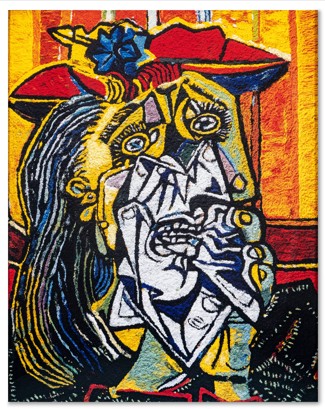
Picasso's Weeping Woman illustrates both the uncompromised and the compromised response in a single painting. The fragmentation is extreme. The structure is broken. Uncompromised instinct registers this immediately as an extreme violation of what it recognizes as objectively valuable. The instinct recoils. The experience is revulsion. The painting achieves what it achieves precisely through that extreme violation. Without the recognition the painting violates, the painting does nothing.
Some viewers, while the instinctual recoil continues, perform a second-layer analysis. Reasoned cognition recognizes that the violation was achieved deliberately, precisely, and at high skill. The appreciation is for the execution, not for the violated form. Both layers are functioning. The instinct still reports the violation. The mind reports that the violation is the work of a skilled hand. This is not subjectivity. It is uncompromised instinct and uncompromised cognition, each doing what each does.
Other viewers experience something different. The instinctual signal of discomfort does not arrive, or it arrives transformed into pleasure. The wiring that should produce discomfort at the violation produces something else. David Cronenberg's 1996 film Crash, based on J.G. Ballard's novel, depicts a subculture sexually fixated on car-crash injuries and the bodies that bear them. The condition has a name in the clinical literature, symphorophilia, the arousal response to disasters and damaged bodies. It is rare. It is not classified as normal. It is the documented existence of compromised instinct producing pleasure in response to what uncompromised instinct registers as transgression. The painting does not produce this response in most viewers. In those it does, the response is evidence of compromised instinct, not evidence that the violation has aesthetic value.
The subjectivity claim cannot survive the painting it tries to explain. Weeping Woman cannot do what it does in a world where beauty is in the eye of the beholder. The painting requires a standard it can violate. The discomfort requires an instinct that recognizes the violation. The reasoned appreciation requires that the violation be objectively present so that the skill of producing it can be objectively assessed. The perverse response requires the same standard the response inverts. Every reading of the painting depends on the painting violation of objective valuable characteristics. The eye of the beholder reports. It does not invent.